

On this page
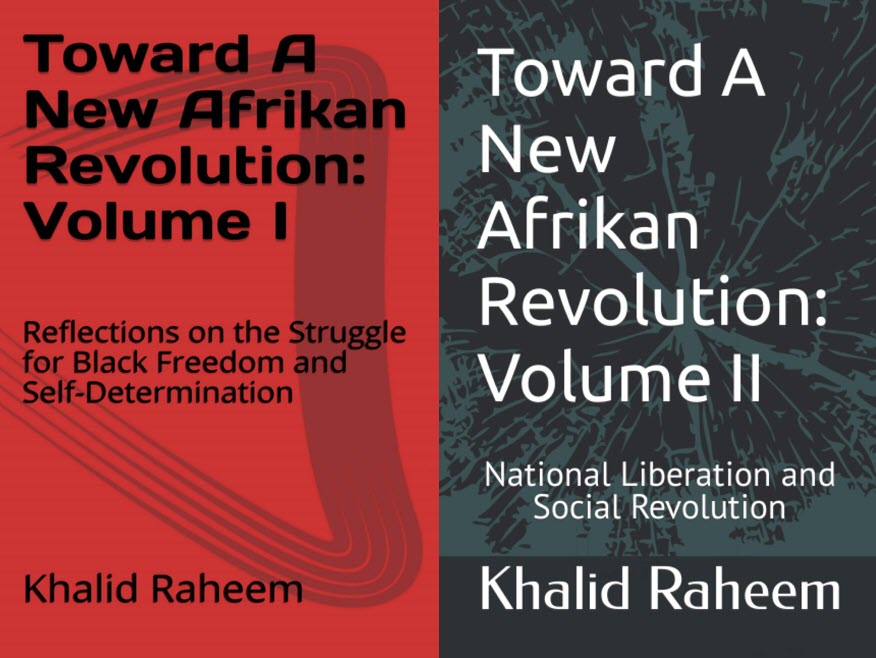
Toward A New Afrikan Revolution: Volume I: Reflections on the Struggle for Black Freedom and Self-Determination by Khalid Raheem #
“Toward A New Afrikan Revolution: Volume I” by Khalid Raheem lays the groundwork for understanding the dynamics of national liberation and social revolution within the Afrikan context. The book examines the historical and socio-political landscapes that have shaped the struggles of Afrikan peoples against colonialism and oppression. Raheem emphasizes the importance of self-determination, cultural identity, and collective action in pursuing a revolutionary agenda that seeks to dismantle systemic inequalities and build a just society.
Here’s an overview and an outline of “Toward A New Afrikan Revolution: Volume I:#
Introduction
- Purpose and significance of the book
- Definition of key concepts: national liberation, social revolution
- Contextualizing Afrikan struggles in the modern world
Chapter 1: The Legacy of Colonialism
- Historical overview of colonialism in Afrika
- Effects of colonial rule on Afrikan societies
- Resistance movements against colonial oppression
Chapter 2: The Nature of National Liberation
- Definition and importance of national liberation
- Key principles guiding national liberation movements
- Case studies of notable liberation struggles
Chapter 3: Social Revolution as a Complement
- Understanding social revolution in the Afrikan context
- Relationship between national liberation and social change
- Addressing social injustices: class, race, and gender
Chapter 4: Afrikan Identity and Cultural Reclamation
- Importance of cultural identity in the liberation struggle
- Strategies for reclaiming Afrikan history and heritage
- Role of language, art, and tradition in fostering unity
Chapter 5: Revolutionary Ideologies
- Overview of different revolutionary ideologies
- Analysis of socialism, pan-Africanism, and other movements
- The need for a tailored ideological approach for Afrikan contexts
Chapter 6: The Role of Leadership in Revolution
- Characteristics of effective revolutionary leaders
- Historical examples of leadership in Afrikan movements
- Importance of grassroots participation and collective leadership
Chapter 7: Strategies for Mobilization
- Grassroots organizing and community engagement
- Building networks and coalitions among Afrikan groups
- The significance of education and awareness-raising
Chapter 8: Global Context of Afrikan Struggles
- The impact of globalization on Afrikan liberation efforts
- Solidarity with other movements worldwide
- The role of international organizations and alliances
Conclusion: Call to action for continued engagement in the revolutionary struggle; Recap of main themes and arguments ; Vision for a liberated and just Afrikan society
Toward A New Afrikan Revolution: Volume I_eBook#
Pop the documents out from the upper right to read / expand / download.
Toward A New Afrikan Revolution: Volume I_Audiobook#

Toward A New Afrikan Revolution: Volume II: National Liberation and Social Revolution by Khalid Raheem #
In “Toward A New Afrikan Revolution: Volume II,” Khalid Raheem explores the intersections of national liberation and social revolution within the context of Afrikan struggles. The book articulates a vision for a united and liberated Afrikan identity, emphasizing the importance of both political and social transformations. Raheem critiques colonialism and imperialism, advocating for a revolutionary movement that addresses systemic inequalities and promotes cultural pride and self-determination among Afrikans globally.
Here’s an overview and an outline of “Toward A New Afrikan Revolution: Volume II: National Liberation and Social Revolution” #
Introduction
- Purpose of the book
- Definition of key concepts: national liberation, social revolution
- Importance of Afrikan identity in the struggle
Chapter 1: Historical Context
- Overview of colonialism in Afrika
- Impact of imperialism on Afrikan societies
- Historical movements for liberation
Chapter 2: Theoretical Framework
- Discussion of revolutionary theory
- Analysis of social change and its necessity
- Role of ideology in the liberation struggle
Chapter 3: National Liberation
- Definition and significance of national liberation
- Case studies of successful national liberation movements
- Challenges faced during liberation efforts
Chapter 4: Social Revolution
- Understanding social revolution in the Afrikan context
- Interplay between social and national struggles
- Key social issues: poverty, education, health
Chapter 5: Cultural Renaissance
- Importance of cultural identity in the revolution
- Promotion of Afrikan history and heritage
- Role of arts and literature in social change
Chapter 6: Strategies for Change
- Grassroots organizing and community mobilization
- Building coalitions among diverse Afrikan groups
- Nonviolent resistance vs. armed struggle
Chapter 7: The Role of Leadership
- Characteristics of effective revolutionary leadership
- Historical leaders in the Afrikan revolution
- The importance of mentorship and youth involvement
Chapter 8: Global Solidarity
- The role of the international community in Afrikan liberation
- Building alliances with other oppressed peoples
- The impact of globalization on Afrikan struggles
Conclusion: Call to action for continued activism and engagement; Summary of key arguments, Vision for a future Afrikan society
Toward A New Afrikan Revolution: Volume II_eBook#
Pop the documents out from the upper right to read / expand / download.
Toward A New Afrikan Revolution: Volume II_Audiobook#
Learn more in RBG Communiversity Knowledge Media eLibrary:#




1 comment